Endowus Wealth Insights Report 2026: Nearly 70% of Hong Kongers Uneasy About Retirement - AI Alone Hasn’t Closed the Confidence Gap
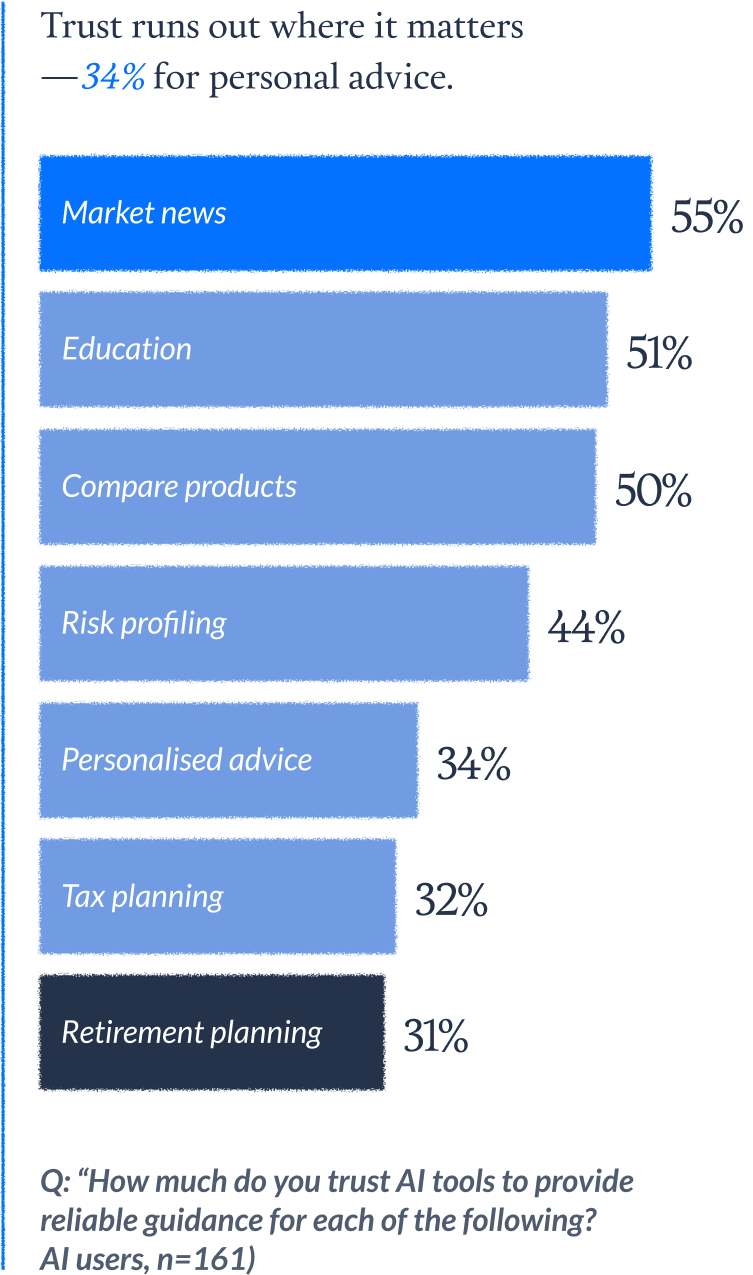
- More than half trust AI for market news (55%) and financial education (51%), but this falls to 31% for retirement planning
- Most remain concerned about whether they will have enough for retirement, even though 63% are already investing beyond MPF for their retirement needs
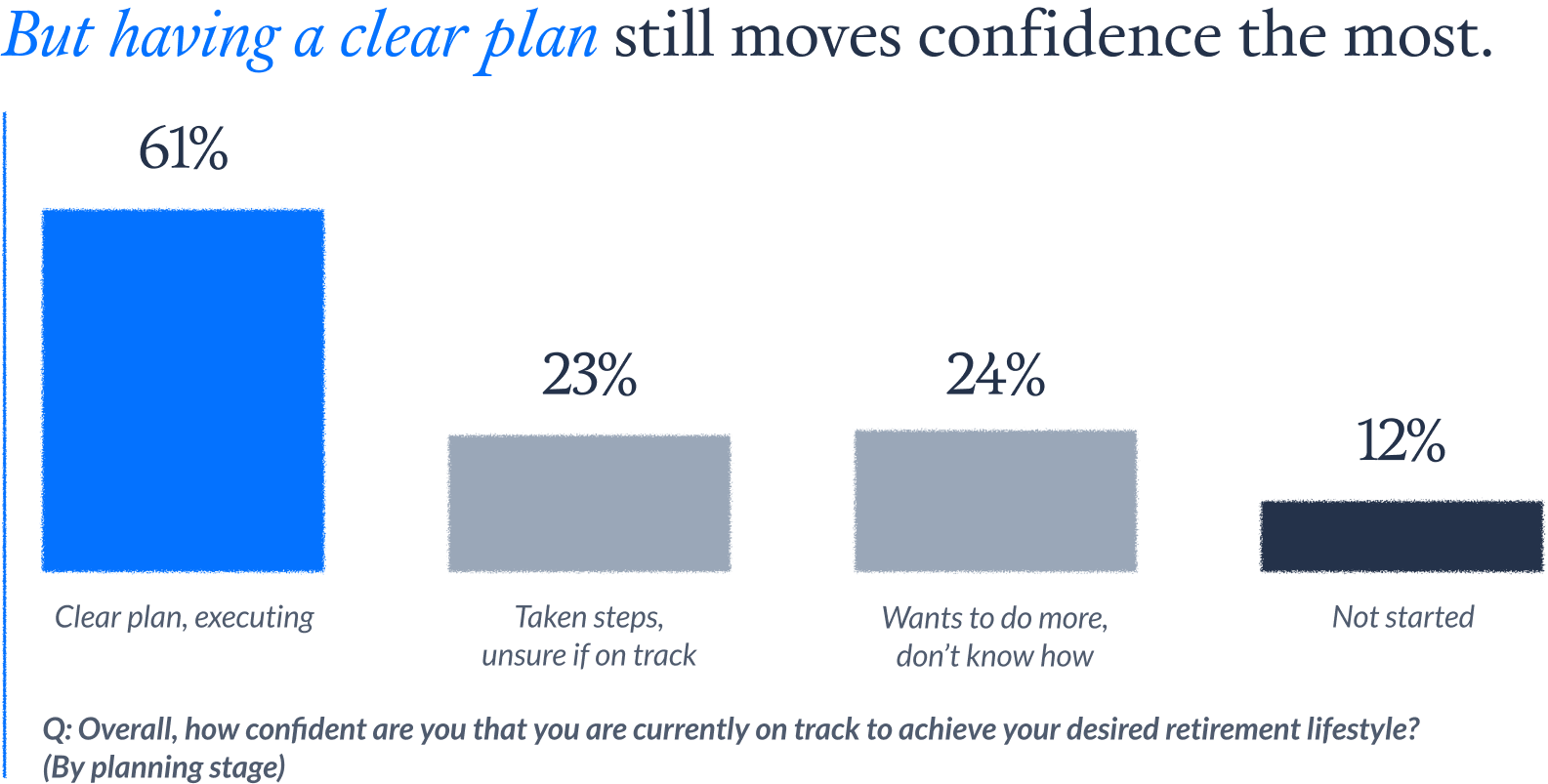
- Confidence peaks at 46% when AI is paired with a human advisor, but having a clear, executable plan is what moves confidence the most (61%).
HONG KONG, 12 AUGUST 2026 - Endowus, Asia's leading independent wealth advisor and investment platform, today released the Endowus Wealth Insights Report 2026: Retirement Confidence in the Age of AI. The Hong Kong findings expose a retirement planning gap rather than an information gap: 68% of respondents are either not confident or sit in an "uneasy middle" about whether they are on track for the retirement they want, even though 63% already invest beyond Mandatory Provident Fund (MPF) contributions.
The report, now in its fifth year, surveyed 500 Hong Kongers about their approach to retirement planning, AI tools and financial advice, and what builds confidence in achieving long-term retirement goals. Rather than measuring AI adoption in isolation, it examines what turns information and advice into retirement confidence. In Hong Kong, the clearest dividing line was whether an investor had a clear, executable plan that could turn intent into action.
A near-universal retirement goal, but two-thirds have a confidence problem
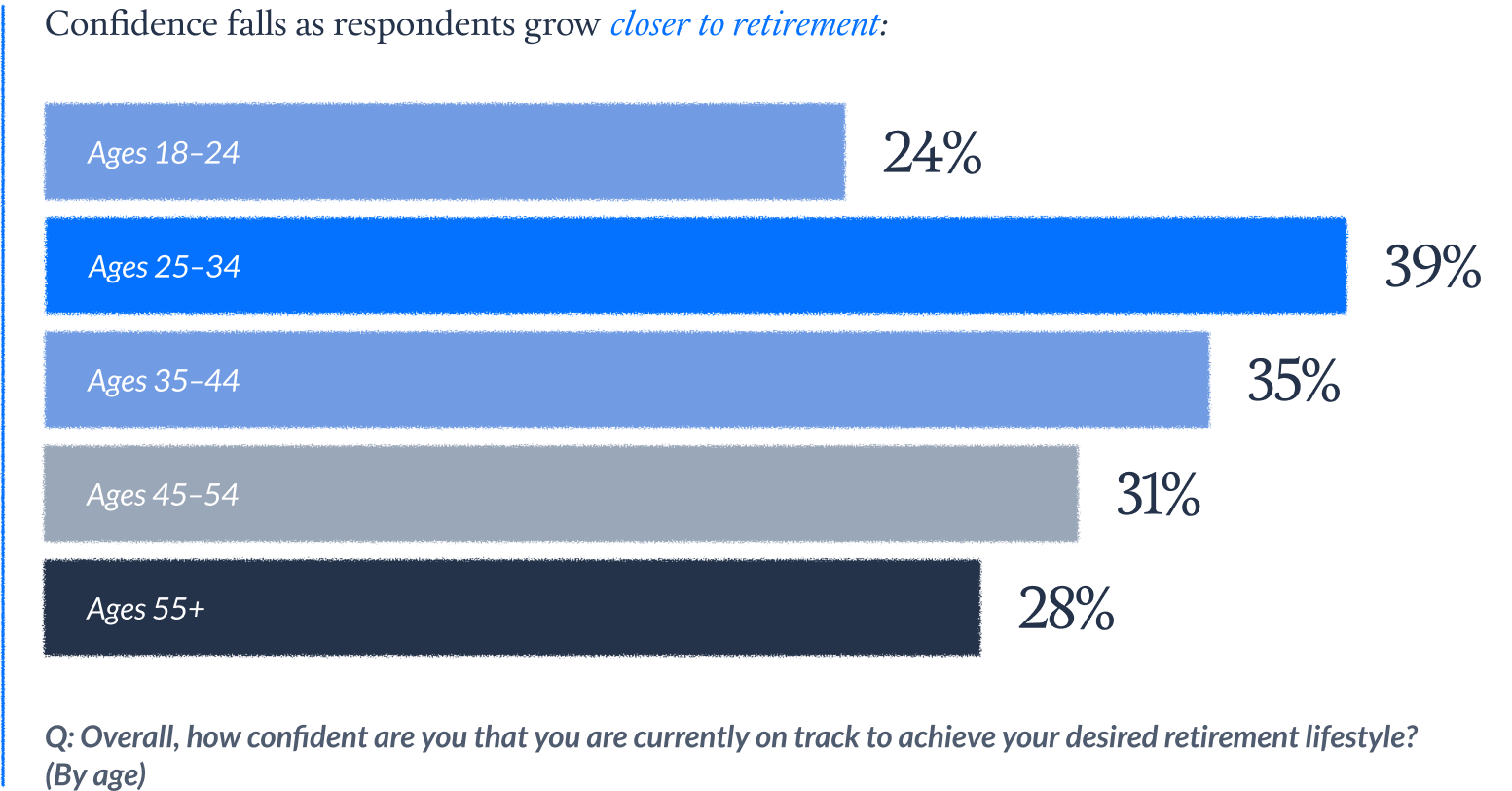
A secure retirement matters to 79% of Hong Kong respondents, yet only 32% feel confident they are on track to achieve it. The remaining 68% are split into two groups: 40% who fall into the “uneasy middle” category, where they are neither confident nor unconfident, and 28% who are not confident.
Confidence also declines with age. It peaks at 39% among those aged 25 to 34, before falling across the older groups to just 28% among those aged 55 and above. The pattern points to a difficult reality in Hong Kong: the people closest to retirement feel the least prepared for it.
Samuel Rhee, Chairman and Group Chief Investment Officer of Endowus, said, "Hong Kong investors are not disengaged but seeking guidance. For years, the industry has mistaken more products, more forecasts, more tools for progress. People do not need more noise. They need personalised advice and a suitable plan they can understand and implement through market and life’s volatility. The real divide is between investors who are merely better informed, and investors who are truly better prepared. The growing retirement confidence gap is not a motivation problem. It is a clarity problem. In a rapidly ageing Hong Kong, the cost of being unprepared for our long-term goals is dangerously rising, and Endowus is here to stand in that gap as a trusted advisor.“
MPF is widely viewed as a foundation rather than a complete retirement plan. 6 in 10 respondents doubt their MPF savings will be enough for retirement, while just 12% think they will. This concern persists despite 63% already investing beyond mandatory MPF contributions for retirement.
For those who have not started investing, the leading barriers include the fear of losing money (28%), no time to research or manage investments (28%), followed by insufficient financial knowledge (24%) and not having enough disposable income (22%). The spread of responses suggests that the confidence gap is not explained by one barrier alone, but by a combination of capacity, caution and a lack of structured guidance.
AI can be depended on to compare and explain - but trust falls when personalised advice is needed
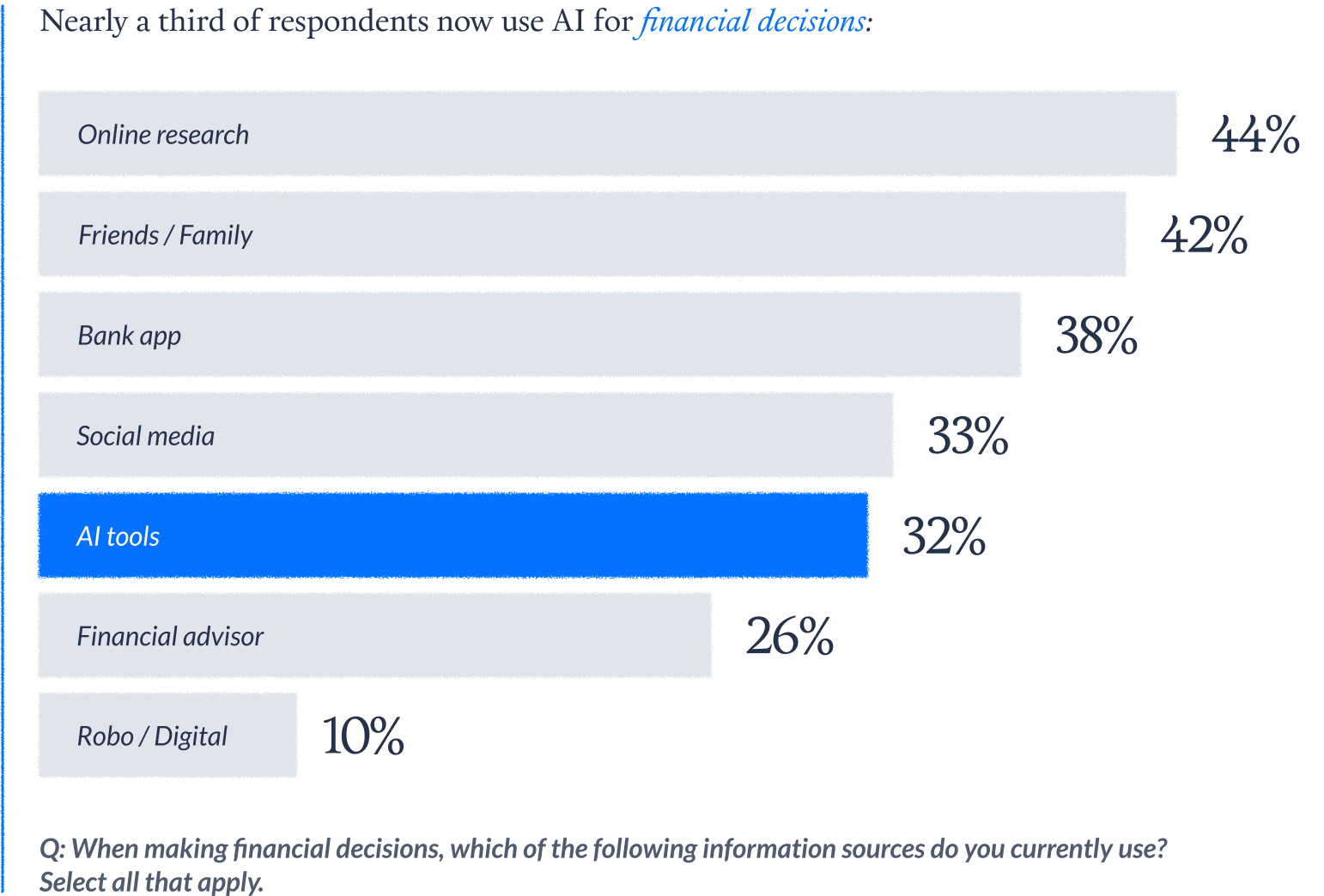
AI is already an established part of financial decision-making in Hong Kong. Nearly a third of respondents (32%) use AI tools to aid them in making financial decisions. Specifically for young adults aged 25 to 34, the number jumps to 45%.
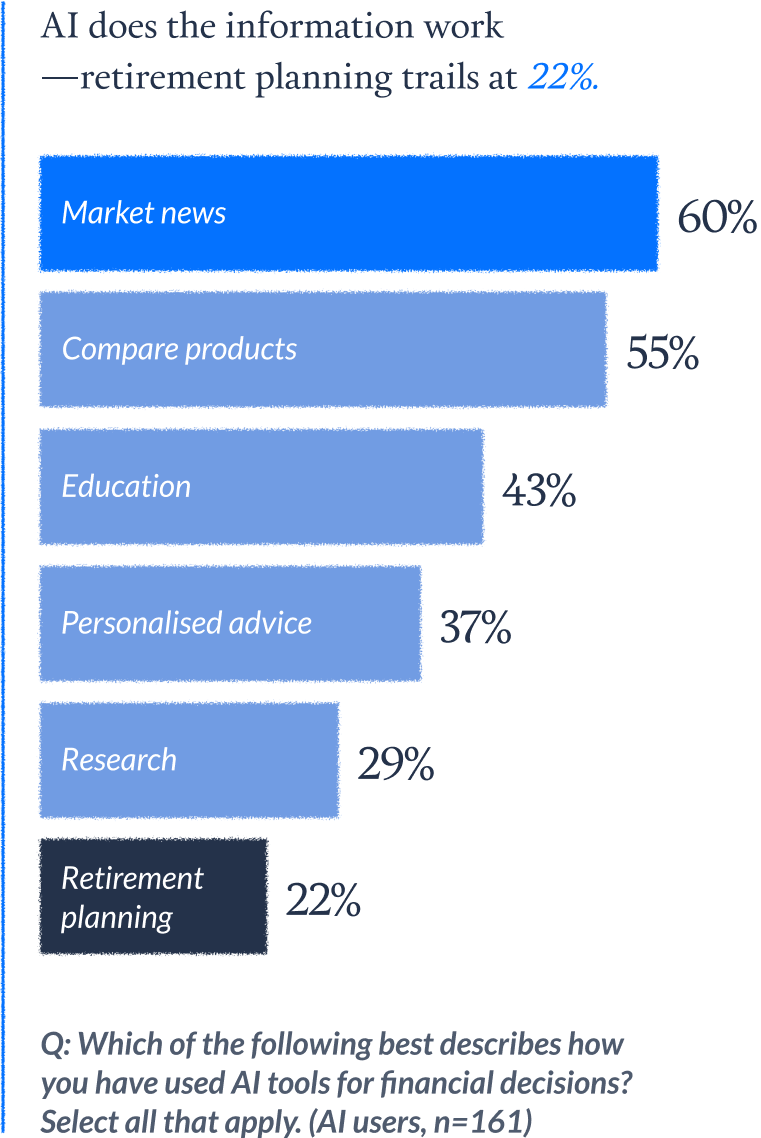
Despite higher adoption, the report notes that AI is used most heavily for information work, and not for making personal decisions that determine retirement adequacy. Among AI users (n=161), 60% use AI for market news, 55% to compare products and 43% for financial education. Only 22% use it for retirement planning.
Trust follows the same pattern. Among AI users, 51% trust AI “a lot” or “completely” for financial education and 50% for comparing products, but it falls to 34% for personalised advice and 31% for retirement planning.
In addition, the report noted that more information does not translate into greater confidence. On average, respondents draw on 2.2 sources to make financial decisions. The Confident group uses 2.6 sources, versus 2.1 sources for both the Uneasy Middle and Not Confident. The disparity suggests that access to information alone does not resolve uncertainty.
Gregory Van, Chief Executive Officer of Endowus, said, "In recent years, the industry has framed AI as a direct competitor to human advisors. Our data shows that’s the wrong debate: what actually moves the needle is having a clear, executable plan, for human and AI to work together on scaling and personalising an end-to-end experience – onboarding, educating, deploying, monitoring, accumulating and decumulating. This works best if humans and AI also operate on a conflict-free business model. This is exactly the gap Endowus was built to close: we combine proprietary technology with conflict-free, fiduciary human advice to help investors see how all their savings can holistically work together to create a clear retirement plan they can stick to and adjust as life changes.”
The strongest confidence signal is a clear plan
Planning behaviour separates respondents even more sharply. 61% of those with a clear plan that they are executing feel confident they are on track, compared with 12% among those who have not started.
Investors who combine AI with a human advisor feel the most confident about retirement. Those who adopt a hybrid approach recorded the highest confidence at 46%, versus 36% for those using a human advisor alone, 31% for AI alone, and just 17% for those using neither. This means hybrid users are almost three times more confident than those who are planning alone.
Asked what would boost their confidence most, respondents want clarity: knowing how much they need to save (38%), projections (31%), lower fees (31%), and a consolidated view of their wealth sources (30%). 28% also want someone to talk to, placing human accountability above several purely informational forms of support.
Steffanie Yuen, Managing Director and Head of Hong Kong at Endowus, added: “Hong Kong investors navigate one of the world’s most information-dense markets, making AI an invaluable tool for distilling data. But AI carries no fiduciary accountability when markets turn, nor can it grasp a family's evolving life goals. That's why we always advise clients to treat AI output as a first draft, not the final answer. For now, the last mile of wealth management still requires a human partner — a licensed advisor who brings personal accountability, emotional grounding and anchoring, and holistic planning when real money is on the line."
Make retirement progress - not tool adoption - the measure of success
Closing Hong Kong's retirement confidence gap requires the industry to design for clarity, not merely access. AI can provide education and process information at scale; human advisors can bring context, emotional anchoring and accountability when it matters most. Neither replaces a plan that connects what investors do today with the retirement they want.
For investors, that means treating retirement planning as an ongoing habit rather than a one-off calculation, and revisiting the plan as life, family needs and markets change.
Methodology
This report was conducted via an online panel survey among mass affluent adults in Singapore and Hong Kong. A total of 1,000 respondents were surveyed, with 500 completes per market. Unless otherwise stated, percentages in this release refer to Hong Kong respondents. The 32% AI figure measures respondents who cite AI tools as a source used for financial decisions. Statistics on AI use by task and trust in AI by task are based on AI users (n=161).