.webp)
.webp)
.webp)
.webp)






- Starting early is the single most powerful investing decision you can make — time in the market, not timing the market, is what drives long-term wealth.
- Experiencing loss early is not a setback — it is an education. The lessons from a bad trade at 18 are worth more than any textbook.
- Hong Kong's MPF is an underused wealth-building tool. Going beyond mandatory contributions through Tax-Deductible Voluntary Contributions (TVC) gives you both a tax break and a long-term compounding advantage.
- Investing is not about spending less — it is about deploying your savings with intention, so that your money is working as hard as you are.
When I was 18, I made my first investment in the stock market. My uncle had opened a brokerage account for me and smirked, "Go ahead and play the market, this will be the best present anyone can give you."
"Ha," I thought to myself, "We are the future — we know what companies to buy. I can be quick, nimble and disciplined. It can't be that hard."
Tip #1: Start your investing journey early
The earlier you start investing, the more time you give compounding to work — and the more mistakes you can afford to make and recover from.
It was September of 2007. I was in my first year at the University of Pennsylvania at the time. There were free newspapers all over campus, as the Financial Times and Wall Street Journal tried to attract the eyeballs of the next generation of Wall Street worker-bees. I was religiously reading the newspaper and watching Yahoo Finance's top movers every day.
Finally, the day to make my move arrived. Amazon was in the worst-performing stocks, dropping by over 5% in a single day. With sweaty palms, I quickly got online to buy my first stock. After three days, Amazon went up by 7% and I sold. I sat back in my chair a bit light-headed. It felt good to be right. I thought to myself, "If I can keep this up for a year, it would equate to an 800x return!"
Emboldened, I began speculating with the same strategy. I started off with a few quick wins, bringing my one-month return to over 30%. I was trading in everything from big tech, to Chinese insurance, to up-and-coming renewable energy.
It is early October 2007. The markets hit an all-time high but cracks were starting to appear. The subprime mortgage crisis was bubbling and the stock market started swinging up and down violently. I am still placing my bets. Moving my portfolio in and out of stocks that looked primed for a rebound. I kept returning to a very volatile and high-profile solar company — Suntech Power, listed on the NYSE. I first bought it at $45, and sold it for $55. Then bought at $65 and sold at $80. Then bought again at $80.
I went home for the Christmas holiday and told my parents about my stock market successes. My mom, volunteering at a climate-change non-governmental organisation (NGO) at the time, was so impressed that she too went to buy Suntech Power.
Tip #2: Experience loss in investments
The pain of losing money early in your investing life is real — but it is also one of the most valuable lessons you will ever receive, and one no classroom can teach.
Within the first week of January, the stock had moved from $80 to $60. I figured I would just ride this out for a bit. Markets were getting really choppy at this point. When Bear Stearns was bailed out and sold to JP Morgan in March 2008, the stock had moved further down to $30. Markets were in free fall and my small-minded strategy was over. I ended up holding on to this stock for a few more years. The company ended up filing for bankruptcy and I sold the stock for around $0.80 in 2012.
My loss was not only in my investment value but also in missing a great recovery. In less than four years from its March 2009 bottom, the global stock market doubled.
If you are invested right now, navigating the recent heavy market corrections catalysed by political uncertainty and risks of inflation, do not be disheartened and turn away from investing forever. This volatility is actually good for all of us, while your human capital (earning potential) is still strong and with a long way to go. Take the opportunity to reflect on your investment strategy and understand the difference between investing to grow wealth and gambling.
Tip #3: Start reading about and understanding investing
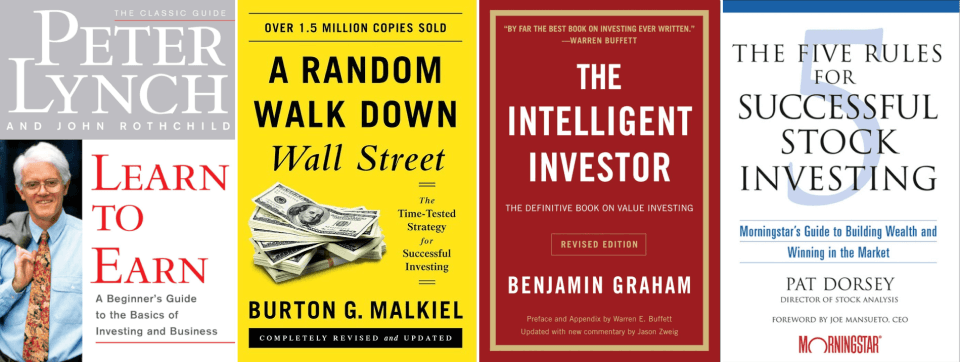
"Investing is not nearly as difficult as it looks. Successful investing involves doing a few things right and avoiding serious mistakes."—John Bogle, founder of The Vanguard Group, which leads the proliferation of low-cost index funds for individual investors and manages over US$5 trillion in assets today.
The markets are powerful. All of financial science has clearly shown us that whether you are a professional investor or retail investor, they are hard to beat persistently.
But there is an evidence-based way to harness the power of markets to grow your wealth: it involves diversification, cost management, and patience. It is about taking compensated risks and avoiding the greed of leverage and downfalls from hubris.
Understanding how markets work through Nobel Laureate Eugene Fama's efficient market hypothesis is a good place to start!
Some good resources from around the web to get you going:
- A movie on evidence-based investing - IFA TV
- The Stupidest Thing You Can Do With Your Money (Ep. 297) - Freakonomics Podcast
- Howard Marks on the US Dollar, Three Ways to Add Defense, and Good Questions (#431) - Tim Ferriss Podcast
Humility developed from Tip #2 is required to take this seriously.
Tip #4: Learn how to handle market volatility
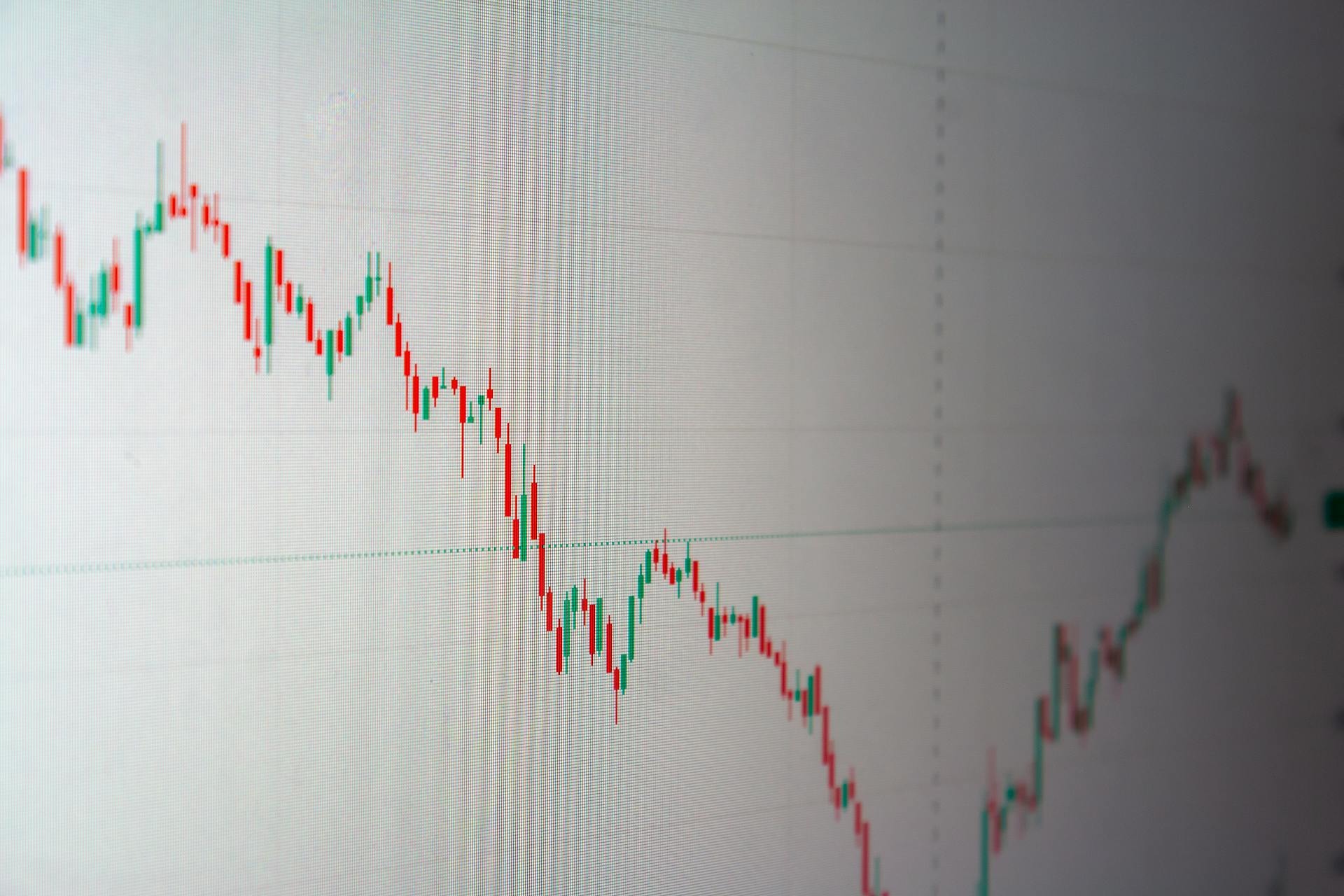
To achieve higher long-term returns, you have to accept — and emotionally tolerate — higher short-term volatility. There is no way around this trade-off.
Stocks are more volatile than corporate bonds, which are more volatile than high-quality government bonds, which are more volatile than cash. If you can stomach volatility, you can patiently achieve expected returns by being diversified and taking compensated risks.
This is easier said than done. Can you stomach your stock investment portfolio going down by over 40% in a crisis and stay the course? If not, you probably should not be invested in 100% stocks, and need a balanced portfolio of diversified stocks and bonds.
Tip #5: Get your core investment portfolio in place
A core portfolio is not a speculation account — it is the foundation of your long-term wealth, designed around your real goals and your honest tolerance for loss.
Understand what big-ticket items you have upcoming, and bucket your money into tranches. The closer the need for your money, the less volatility it can afford to take. The further out the need for the money (like retirement), the more you can target higher expected returns. Once your buckets and goals are set, you will have a core portfolio suitable for your needs and be on your wealth-building journey.
It is unwise to have a core portfolio that is beyond what you can stomach in terms of volatility from Tip #4.
Tip #6: Do not hold too much cash
Cash drag is one of the most underappreciated threats to long-term wealth — money sitting idle is money not compounding.
If you are sitting in 90% cash and make a 10% return on your invested money, that will only equate to a 1% return on your total wealth. You should only have in cash what you need in the next two to three years so that you can be efficiently invested and let the power of compounding take over.
Read more: The power of compounding interest explained
Tip #7: Have an MPF strategy
Up to 10% of your relevant income — 5% from you and 5% from your employer — goes into your Mandatory Provident Fund (MPF). Being strategic about how it is invested can make an enormous difference to your retirement.
Leaving your MPF entirely in conservative or cash funds that struggle to keep pace with inflation will severely limit your wealth accumulation over time. Instead, investing your long-term retirement horizon to earn an estimated 7% for 30 years would give you a potential return of 660%^.
^Assuming steady growth without market drops. This is an illustrative scenario. The actual market may fluctuate and all investments involve risk.
Don't stop at the mandatory minimums. Utilising Tax-Deductible Voluntary Contributions (TVC) is an easy win to grow your wealth while immediately lowering your tax bill. Later on, when you cross 60, options like the HKMC Annuity can help you efficiently convert those investments into a reliable, lifelong income stream.
Tip #8: Spend your life and precious time being human
The most valuable asset you have is not your portfolio — it is your time. Spend it on the things that matter, not obsessing over markets.
After my first job in investment banking at UBS in Singapore, I wanted to get closer to a real operating business. I was fortunate to find a home at GrabTaxi (now known as Grab), and help start their payment business (now known as GrabPay). I realised that being productive is really about contributing your time, effort, and unique creativity to make lives better. This could be done through daily interactions with others, relationships, or the products and services you build.
I wanted to do something that would make a lasting impact on people's lives. My partners and I saw how difficult it was to invest well, so we started Endowus to help people invest better, conveniently, and intelligently across all their money — MPF, CashUp, and cash.
Time spent trying to beat the market and investment success are not correlated, with professionals not able to show any persistence in returns. The hope is that Endowus lets people spend more time living life, knowing that they have set themselves up for success.
Tip #9: Spend your money to fuel your life
Money is a means to an end, not the end itself. Give yourself permission to spend on the things that genuinely make your life richer.
If you love food, spend money on food experiences that inspire you. If you love travelling, spend money on those life-changing trips. There is no need to feel guilty about it. Money is a means to an end — not the end. Just spend within your means, so that "future you" will not suffer at the hands of the current you.
Tip #10: Be serious about your investments
Most people spend more time picking a restaurant than thinking about how to grow their wealth over the next 30 years. That imbalance has real consequences.
Most people I talk to would rather spend 30 minutes looking for where to have supper tonight than research for 30 minutes on how to grow their wealth over the next 30 years. Put in the effort to understand why and how you should take risks with your hard-earned money for higher expected returns.
As Warren Buffett famously said, "Someone's sitting in the shade today because someone planted a tree a long time ago."
Before you do anything, clear high-cost debt
It is hard for any investment to beat the interest rates you might be paying on high-cost debt, such as student loans or credit card balances, so before you do anything save up and clear your debt so you can start your wealth-building journey.
To get started with Endowus, click here.
<divider><divider>
Risk Warnings
Investment involves risk. Past performance is not an indicator nor a guarantee of future performance. The value of investments and the income from them can go down as well as up, and you may not get the full amount you invested. Rates of exchange may cause the value of investments to go up or down.
This article is not intended to be relied upon as a forecast or research or investment advice, and should not form the basis of any investment or other decisions. The information contained herein is not intended, and should not be construed, as any legal, tax, regulatory, accounting or financial advice. If you would like investment, accounting, tax or legal advice, you should consult with your own professional advisors regarding your individual circumstances and needs.
The information in this article may not be suitable for all investors. You are responsible for any action that you take or decision that you make in reliance on any content in this article, and you agree that Endowus HK Limited (“Endowus”) is not liable under any circumstances.
No invitation or solicitation
Neither the information, nor any opinion, contained in this article constitutes a recommendation, offer or solicitation by Endowus or its affiliates to you to buy or sell any securities, collective investment schemes or other financial instruments or services, nor shall any such security, collective investment scheme, or other financial instruments or services be offered or sold to any person in any jurisdiction in which such offer, solicitation, purchase, or sale would be unlawful under the securities laws of such jurisdiction.
This is not intended to be an invitation or offer made to the public to subscribe for any financial product or to enter into any transaction.
Accuracy of Information
Whilst Endowus has made reasonable efforts to provide accurate and timely information, there may be inadvertent delays, omissions, technical or factual inaccuracies or errors in any such information. Endowus does not warrant or represent that the information in this article is correct, accurate or reliable.
Opinions
Any opinion or estimate above is made on a general basis and none of Endowus, nor any of its affiliates, representatives or agents have given any consideration to nor have made any investigation of the objective, financial situation or particular need of any user, reader, any specific person or group of persons. Opinions expressed herein are subject to change without notice.
Any forward-looking statements, prediction, projection or forecast on the economy, stock market, bond market or economic trends of the markets contained in this article are subject to market influences and contingent upon matters outside the control of Endowus and therefore may not be realised in the future.
In presenting the information above, none of Endowus, its affiliates, directors, employees, representatives or agents have given any consideration to, nor have made any investigation of the objective, financial situation or particular need of any user, reader, any specific person or group of persons. Therefore, no representation is made as to the completeness and adequacy of the information to make an informed decision. You should carefully consider whether any investment views and products/ services are appropriate in view of your investment experience, objectives, financial resources and relevant circumstances.
This article has not been reviewed by the Securities and Futures Commission of Hong Kong.


.png)