
Register for the event
Endowus invites you to our exclusive event with Macquarie Asset Management, as we discuss unlocking opportunities in Infrastructure- a $1.3tn asset class.
This event is reserved for Accredited Investors (AIs) only. To register for the event, please indicate one of the following:
- Diversification matters more than ever amid inflation, geopolitical uncertainty and changing market dynamics.
- AI offers long-term potential, but disciplined investing and strong fundamentals remain crucial.
- Staying invested and focusing on long-term goals remain key to building sustainable wealth.
As it happens each year, we brought the Endowus community together at our Wealth Summit, so they can hear how professionals make sense of a fast-changing market, so they can stay on track towards their goals.
In this article, we summarise the valuable insights shared by our esteemed partner fund managers and guest speakers. If you want more colour, you may watch the full livestream playback here.
Presentation by Endowus CIO Office: State of the markets
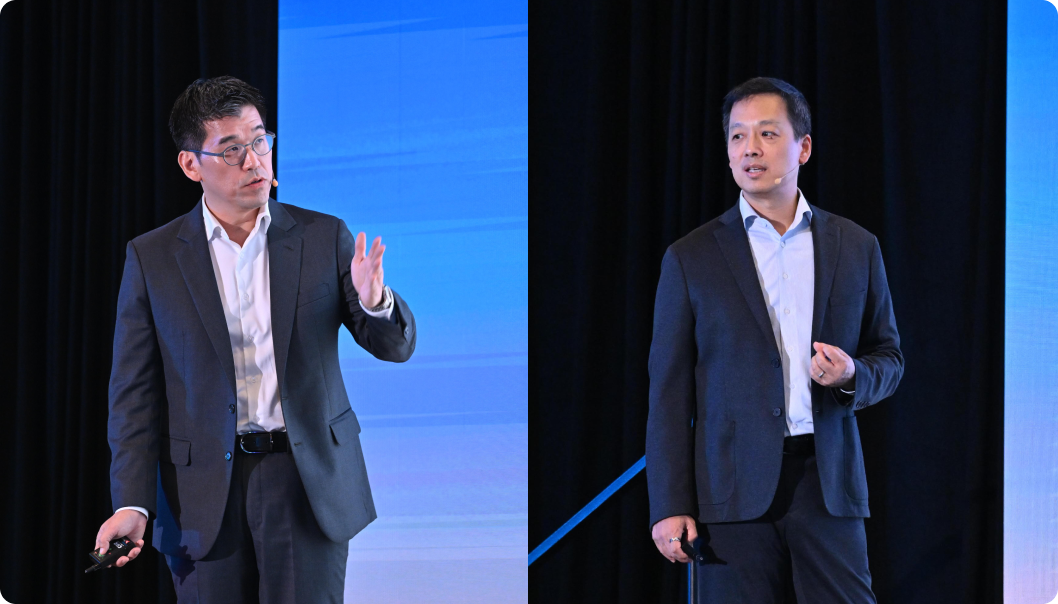
- The US economy is growing, but inflation is back in focus. US GDP grew an annualised 3.4% in the third quarter, its fastest pace in 12 months, supported by steady consumer spending and AI-related investment. However, cumulative US headline inflation has exceeded 30% over the past seven years, and higher oil prices linked to the Iran war have added pressure. Consumer confidence is near historic lows, though spending is held up by the top 10% of earners, who now account for almost half of total US spending.
- Bond yields have reset higher across the curve. After the US Federal Reserve (Fed) recently raised rates, markets began pricing in a steep hiking cycle over the next 12 to 18 months. Yields across the curve have risen from a year ago, while investment-grade credit spreads have barely moved. Bonds then rebounded strongly last month, a reminder that selling at the bottom can be costly.
- Equity gains have been narrow, and new supply is rising. Corporate profit margins are at record highs, but returns have been dominated by two sectors: semiconductors and energy. Excluding technology, energy and defence, S&P 500 earnings are growing more slowly than inflation. Equity issuance this year may be the highest on record, and historically, surges in new supply have tended to coincide with market peaks.
- Diversification may work differently from here. Regional diversification has offered less protection, as tech and energy exposure drive returns across regions. Factor exposures have behaved differently, with value, profitability and small caps recently outperforming globally. Equity valuations have also corrected meaningfully, which may work in favour of long-term investors.
- Bonds still earn their place in a portfolio. Starting yields have historically been closely linked to bonds’ subsequent 10-year returns, and yields today sit around 5%. Bonds have historically done best during growth shocks. Higher yields also act as a cushion: a 200 basis point fall in yields may deliver over 20%, compared with a loss of about 8% if yields rise by the same amount.
- Stocks and bonds moving together is not new. The negative stock-bond correlation seen between 2000 and 2020 was closer to the exception than the norm. As long as the correlation is below one, holding both still improves a portfolio’s risk-return trade-off. Adding alternatives such as hedge funds, private markets or daily-liquid liquid alternatives may improve it further, with allocation decisions driven by each investor’s goals first.
Are we in a bubble—and does it matter?
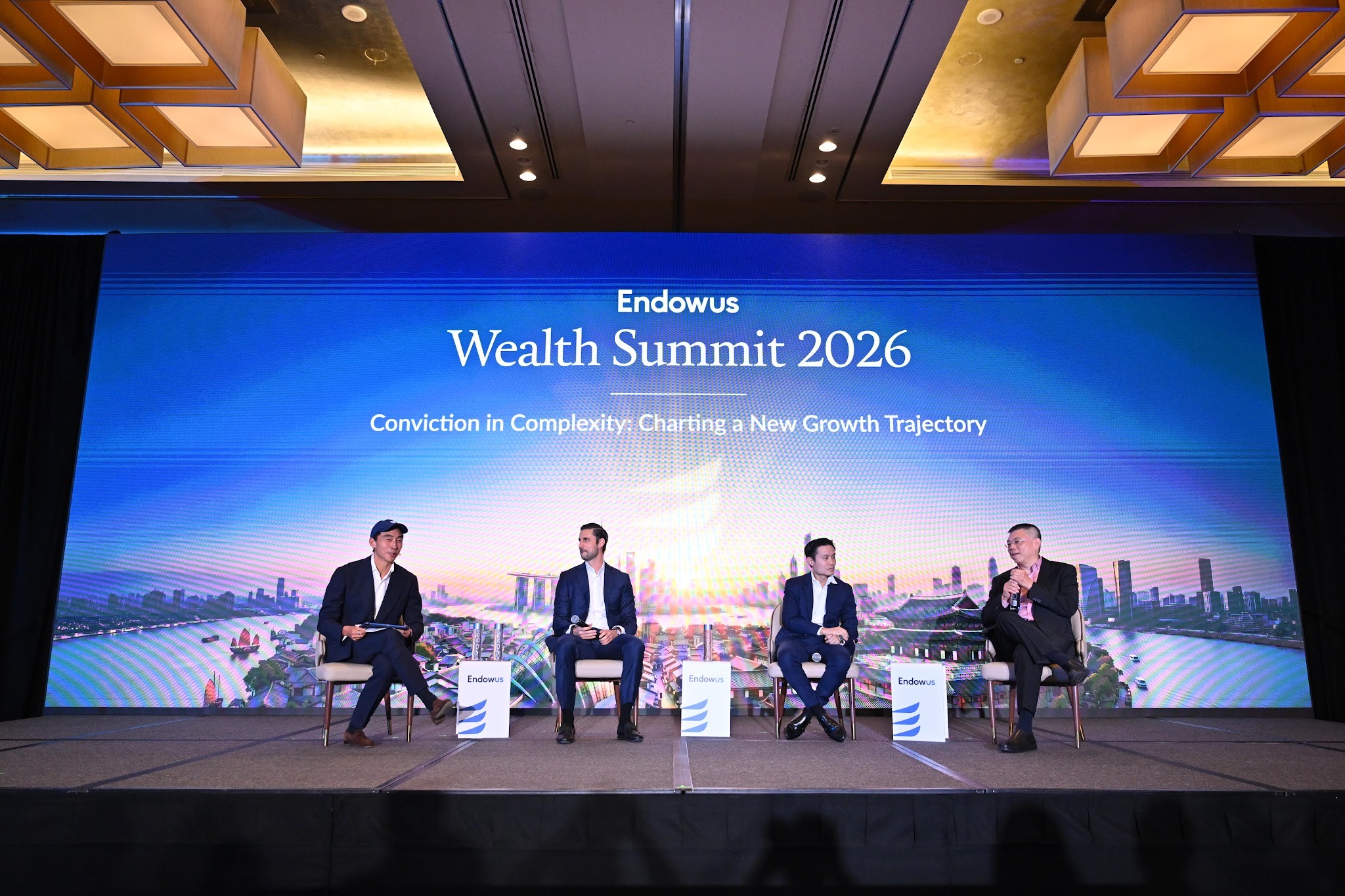
- Bubbles start with a kernel of truth that gets extrapolated to the extreme. As belief takes hold that no price is too high, valuations detach from fundamentals and leverage builds. The panel did not see the overall equity market in a bubble, though some pockets show bubble-like traits, such as leveraged bets on single stocks and circular financing deals in AI. If anything, conditions resemble the early stages of a bubble forming rather than one about to burst, with some AI leaders’ valuations having derated even as prices rose.
- Markets are now scrutinising how AI spending is funded. Investors are separating companies that fund capital expenditure from free cash flow from those relying on new debt. Companies with positive free cash flow can scale back spending if needed, while those dependent on borrowing face higher financing costs. The panel viewed the recent pullback in AI names as a healthy correction rather than a sign of a bust.
- This year’s bond sell-off came from a sharp repricing of rate expectations. Markets started the year pricing in two Fed rate cuts and later swung to pricing in several hikes. Drivers included inflation concerns from the Middle East conflict, a more resilient US economy, fiscal worries across several developed markets, and heavy bond issuance, with hyperscalers and technology firms. Much of this is already priced in, with yields now at multi-year highs.
- Bonds can still diversify, depending on the economic regime. When markets focus on inflation, bonds and stocks can fall together, as in 2022. When growth becomes the focus, they tend to move in opposite directions again. Today also differs from 2022, when the Fed had to lift rates from near zero to around 5% as inflation approached 8%.
- Diversify within asset classes, not just across them. Some segments, such as Singapore dollar corporate bonds and shorter-duration Asia-Pacific investment-grade bonds, have shown lower correlation to equities than US Treasuries.
- Anchor to your goals rather than market calls. Rather than making big swings, investors can start from a strategic allocation that matches their goals and time horizon. For those sitting in cash, dollar-cost averaging may help manage the risk of investing at the wrong time. Avoid the temptation to concentrate, and stay diversified and patient over a three- to five-year horizon or longer.
Fireside chat: The forces reshaping our world

- Inflation is being driven by one supply shock after another. COVID-19, the Russia-Ukraine war, the Iran war, and AI demand outpacing the supply of chips, memory and energy have each pushed prices higher. A possible super El Niño may add pressure on food prices next. Because shocks in one area tend to spread across the wider economy, the credibility of central banks in fighting inflation remains crucial.
- A concentrated portfolio carries an implicit forecast. The tech sector alone has a 38% weightage in the S&P 500 index, and the US accounts for about half of global market capitalisation. Holding a market-cap-weighted portfolio implicitly assumes the largest holdings will keep doing as well as everything else. Investors should ask whether they agree with that assumption, which makes diversification more important.
- Two pairs of forces are shaping the medium term. Ageing populations, including in North Asia and Singapore, are adding to government spending and debt, a pressure Japan is beginning to feel as rates rise. Meanwhile, geopolitics has acted as a negative productivity shock and AI as a positive one.
- A global competition for capital is keeping rates higher. Capital goods imports in Asia are growing year on year, driven not only by AI but also by defence, energy security and supply chain resilience. Much of this spending is relatively insensitive to interest rates, and the entire yield curve has shifted up. For savers, this may be an opportune time to lock in relatively attractive yields without taking on significant credit risk.
- Institutional portfolios are evolving beyond 60/40. Many institutions are moving towards variations of a 60/20/20 mix, splitting the defensive allocation between bonds and real assets such as infrastructure and real estate, whose cash flows tend to be linked to inflation. Well-chosen liquid alternatives may also help diversify an equity-heavy portfolio. While diversification has not paid off much in the past decade, the panel suggested this may be the environment where it does.
- AI’s investment payoff is still unproven. Unlike earlier internet giants, which grew with relatively little capital, AI requires heavy and ongoing investment, and frontier AI developers still spend more than they earn. The key question is whether the return on invested capital will justify today’s spending. The panel expects productivity gains, but how large they will be remains uncertain.
- AI is reshaping work faster than past technologies. AI is spreading far faster than electricity or the internet did, and it affects higher-skilled roles more than past innovations. So far, the data shows fewer hires of young graduates rather than mass job losses. The panel highlighted the growing value of judgement, debate and using AI to complement thinking rather than replace it.
Where in the world are the alpha opportunities?

- Today’s uncertainty is creating more dispersion, and more opportunities. Compared with a decade ago, investors now need to account far more for inflation and policy uncertainty, and US rates may not yet fully price in future inflation risk. Reduced globalisation, fiscal concerns and conflict have widened gaps between markets and asset classes. For systematic strategies that invest in thousands of smaller developing themes, this environment is especially fertile.
- Asian tech is broader and more diverse than US tech. The AI value chain spans raw materials and power, chips and memory, infrastructure such as printed circuit boards, equipment and cooling, and end applications. Markets like Korea and Taiwan are closely tied to US hyperscaler spending. Large domestic markets such as China and India are driven more by local demand and policy, making them potential diversifiers.
- China and India remain too big to ignore. China’s domestic A-share market is largely driven by local investors and has had low correlation with US and global equities. Beyond a weak macro backdrop, the panel pointed to world-class companies in biotech, robotics and autonomous driving. In India, everyday domestic consumption continues to create investable opportunities that have little to do with external factors.
- Emerging market debt is increasingly attractive. Credit quality has improved, with more upgrades than downgrades in recent years, and yields are at 15-year highs. Short-duration emerging market debt may offer a sweet spot: flat yield curves mean investors can earn attractive income while taking on far less interest rate risk.
- Fixed income needs a more flexible approach than buy-and-hold. Simply buying bonds and holding them to maturity may no longer deliver the stability it once did. Professional managers can take short positions, manage inflation and currency exposure, and adjust duration quickly. Inflation-linked bonds alone, for instance, did not prevent significant losses in 2022.
- Think carefully about what is structural and what is cyclical. Market expectations swung from three Fed rate cuts in January to several hikes later in the year, so flexibility and liquidity matter. Market cycles also appear to be getting shorter. For long-term structural themes like AI, owning the essential inputs, such as power, battery storage and memory, may be more reliable than picking which AI model wins.
Investing well throughout our lifetime

- A glide path adjusts your equity allocation as you move through life. Early in your career, the main objective is growth, so a portfolio holds mostly equities. As retirement approaches, preserving capital and generating income matter more, so the equity allocation gradually “glides” down. The panel described it as having expert advice embedded in the product, making the equity-bond split the most important decision most investors will make.
- CPF’s new life-cycle scheme may fill a gap for members. CPF holds more than S$650 billion across different accounts, with more than S$230 billion sitting in CPF-OA.. CPF Board’s new voluntary life-cycle investment scheme, due in the first half of 2028, will offer portfolios built with simplified, low-cost and diversified products. This aims to complement the existing system and gives an additional option alongside current choices under CPFIS. Cash carries hidden risks. Leaving money in cash may feel safe, but rates on Singapore fixed deposits may not keep pace with inflation, eroding purchasing power over time. Fixed deposits also carry reinvestment risk, as rates can fall quickly when central banks cut. Bonds, meanwhile, can be a valuable cushion in a retirement portfolio.
- A good glide path goes beyond the equity-bond split. The type of equities and bonds you should own can also change with your life stage. Age is a useful starting point because it captures time horizon and typical income patterns, but investors should review their allocation if their circumstances change significantly.
- Retirement is not the end of investing. With retirement potentially lasting 25 to 30 years, inflation could erode a third or more of your spending power, so accepting some investment risk is necessary. In Singapore, the assured income from CPF LIFE may also allow retirees to take on a little more investment risk elsewhere.
- Get started, stay invested and don’t de-risk too early. Research cited by the panel suggests that shifting decisively away from equities before your mid-40s may roughly double the chance of falling short in retirement. Staying invested matters too, as missing just a handful of the market’s best days can significantly reduce long-term returns.
Webinar: 2021 Global outlooks and market trends

Lessons from past bear markets with Barton Biggs

Webinar: Endowus Insights 2021: Paving a new way forward