


.webp)
.webp)
.webp)
.webp)






.webp)










%20(1).gif)

Register for the event
Endowus invites you to our exclusive event with Macquarie Asset Management, as we discuss unlocking opportunities in Infrastructure- a $1.3tn asset class.
This event is reserved for Accredited Investors (AIs) only. To register for the event, please indicate one of the following:
- The Fed raised rates for the first time since 2023, and more rate hikes are expected in the near-term.
- Bonds have sold off this year due to the pressure from rising rates. Today's higher all-in starting yields provide investors a meaningful income cushion to mitigate negative price movements.
- Bond investors may consider diversifying their portfolios and broadening their opportunity set, while keeping a longer-term perspective amidst short-term rate volatility.
The US Federal Reserve (Fed) made its first hike since 2023 at its September 2026 meeting, lifting the target range by 25 basis points (bps) to 3.75%–4.00%. This decision came after inflation data had not “meaningfully improved”, and renewed US-Iran hostilities kept oil prices elevated.
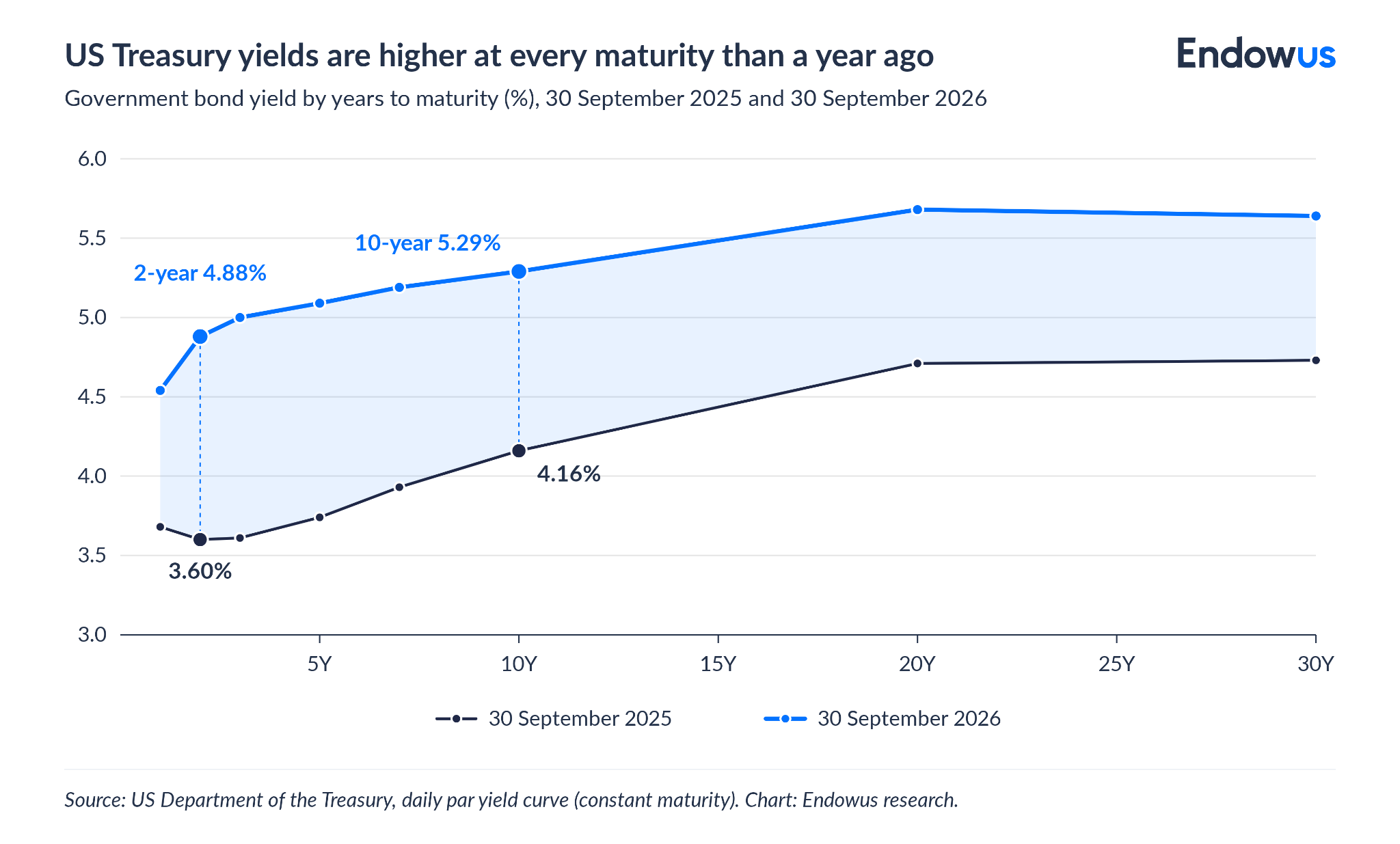
More rate hikes are expected—according to CME FedWatch (as of 1 Oct 2026), traders are pricing an 89.0% probability of at least one more hike by year-end. That being said, much of the yields we are seeing today have already priced in expectations of more rate hikes. The rate sensitive 2-year US Treasury yield has risen by some 128 bps from a year ago (as of 30 Sep 2026), while other longer tenors of the curve have also risen but to a lesser degree, resulting in a bear-flattening of the curve.
With such large moves in Treasury yields seen this year, what does it mean for investors like yourself, and where do some of the risks and opportunities lie?
How do Fed rate decisions affect the yield curve?
From a policy standpoint, the Fed does not set bond yields directly. It sets a target range for the federal funds rate, which determines the interest rate at which US banks lend reserves to each other on an overnight basis. More broadly, it serves as the baseline borrowing cost for many sectors across the economy, from short-term consumer loans like credit cards and auto loans, to influencing the discount rates and corporate borrowings and investment.
When the Fed hikes rates or is expected to, the impact tends to situate more directly on the shorter part of the yield curve. In practice, the 2-year US Treasury yield is generally used as a gauge reflecting both immediate rate movements and near-term rate expectations, due to its high rate sensitivity. Movements are heavily influenced by policy decisions and expectations of near-term monetary policy as communicated or signalled by the Fed, as well as short-term macroeconomic data points on inflation and labour markets.
However, the impact can reverberate across all tenors of the yield curve. Longer-dated government bonds have potentially greater price volatility due to their longer duration, which makes them more sensitive to rising yields. Factors that come into play which affect long-term yields include not only short-term policy rates but also longer-term inflation expectations and economic growth trajectory, as well as the fiscal outlook and debt uncertainty. The 10-year Treasury yield is perceived as one of the most important benchmark yields in fixed income that incorporates all these factors, and is a widely used discount rate in finance and equity valuation.
Look beyond rates: bond yields and credit spreads
When a new corporate bond is priced in the market, its yield is typically determined by a benchmark yield plus a spread on top, where the benchmark yield refers to the relevant Treasury yield for that specific tenor. For instance, 10-year issued bonds typically reference the 10-year Treasury yield as the benchmark, over which the issuer will pay a spread to borrow money.
This “credit spread”, which refers to the additional corporate risk premium the market places on that particular company as a measure of its creditworthiness, is set at a particular level upon pricing, but it can fluctuate after the bond starts trading in the secondary market.
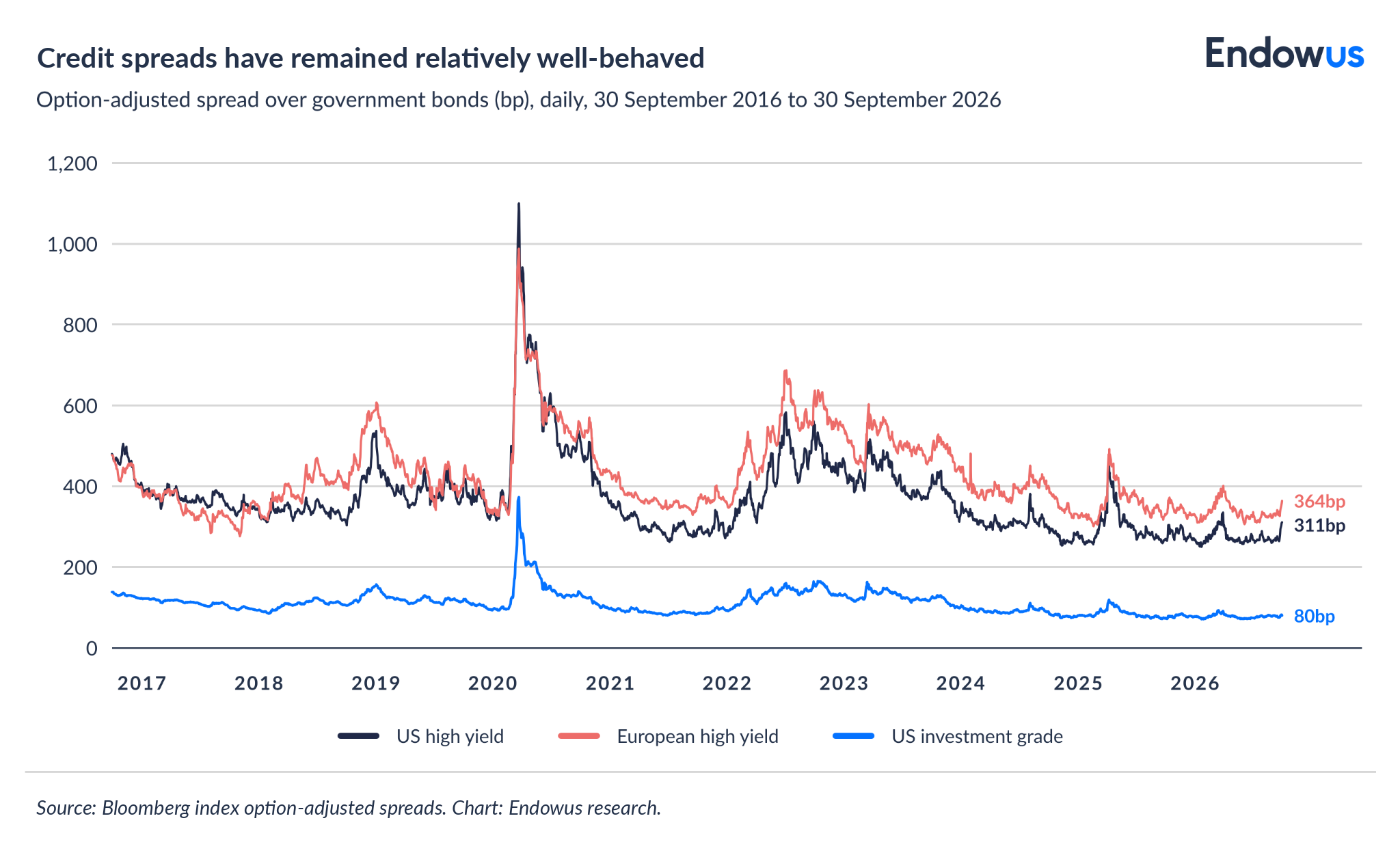
For the bondholder, volatility comes about when either the benchmark yield component or credit spread changes, as influenced by market forces. To put things in perspective, the volatility in fixed income this year has been largely rate-driven, while credit spreads have remained relatively well-behaved, leading to the weakness we are seeing in bond portfolios.
Yields depict the outlook for returns: what are they telling us?
For many, it is easy to get fixated on the next Fed decision. However, it is important to distinguish between the two—rates look at the short-term, while yields give us a longer-term picture of the market’s expected rate trajectory.
Under normal conditions, longer-term bonds provide a higher yield because investors expect additional compensation (the “term premium”) for locking up money for longer. And this positive term premium describes the constructive macro-economic growth environment we are in today, where investors are compensated for extending duration in their portfolios.
This year’s bear-flattening of the curve, however, has reduced this relative attractiveness by some degree, compressing the 2-10s spread to just 41bps as at end September, from 72bps at the beginning of the year, and from 56bps one year ago.
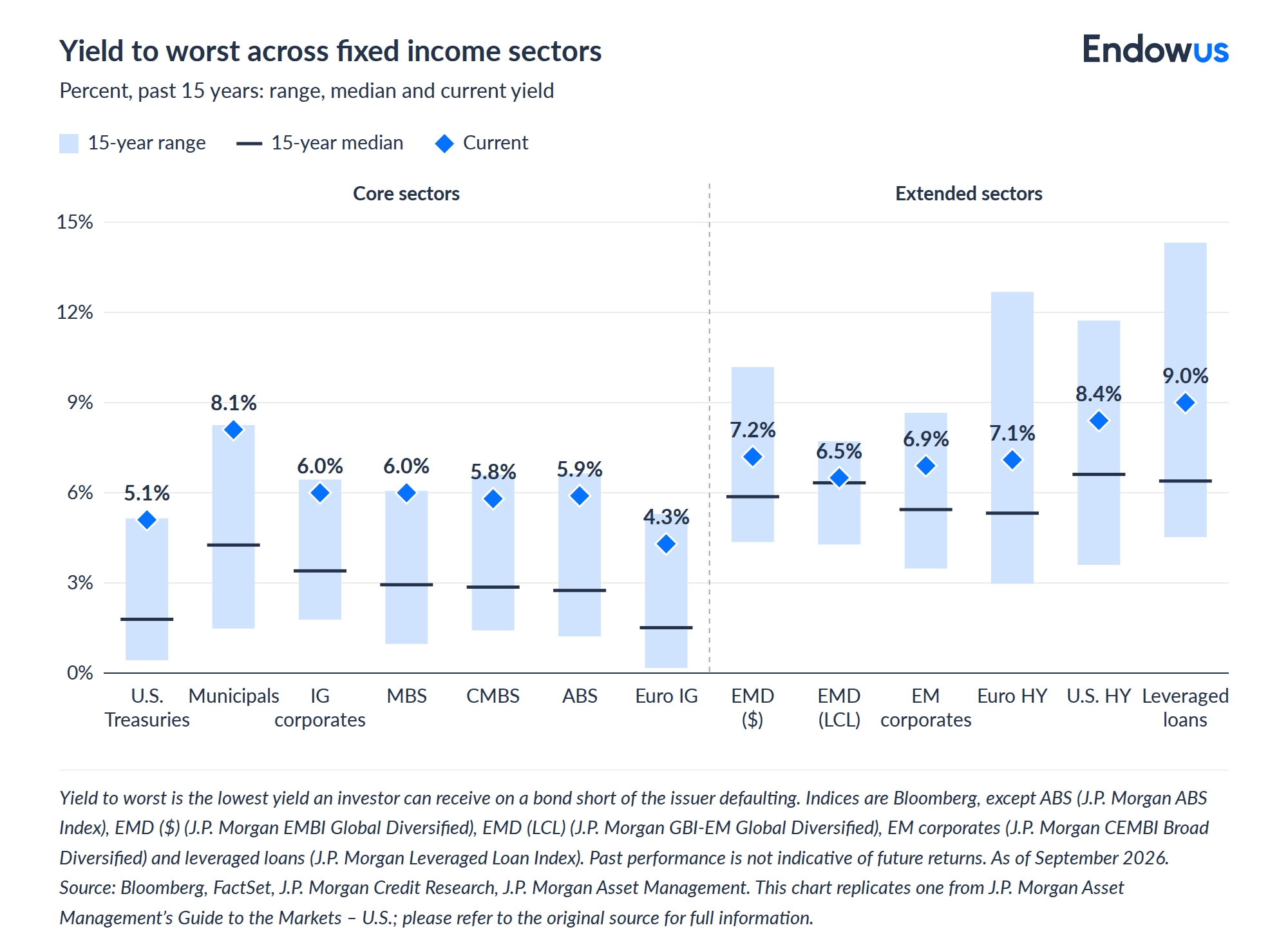
If we look at where bond yields stand today relative to where they were historically, the picture looks fairly positive—the chart below shows that yields across some fixed income sectors currently sit comfortably above their 15-year medians, implying that all-in yields are more attractive compared to historical levels. This may provide investors with some return cushion in case of further rate-driven selloffs.
On a separate note, we mustn’t forget that the yield curve remained inverted for two full years between July 2022 and August 2024, when short-term yields rose above long-term yields amidst growth concerns.
However, as of writing, expectations of global economic growth remain “sturdy”, according to Goldman Sachs Research, driven by resilient US growth and strong AI-related investment. On the credit side, corporate fundamentals continue to be strong and defaults low, and US IG credit has seen a tightening trend this year.
All-in yields are attractive. But what about the key risks?
Of course, we cannot rule out the risk that inflation continues to run hot for longer, with recent headline PCE data showing 3.4% in the 12 months through August 2026, which could keep benchmark yields high or potentially higher. A government bond-heavy exposure would be more vulnerable under such a scenario.
On the flipside, credit spreads have remained relatively well-behaved and rangebound this year, due to a strong economic growth environment and resilient corporate fundamentals that have driven robust demand for corporate credit. IG spreads have compressed to around 80bps, near the tightest levels of the past decade. HY has seen a similar trend till August, while in September it saw some widening in HY spreads, at 311bps as of writing.1
One key risk to watch, therefore, is any widening in credit spreads from their current tight levels down the road, which could cause the price of corporate bonds to fall. While starting yields may be attractive from an all-in total yield perspective today (due to elevated benchmark yields), with spreads being near their all-time tights in the past decade, any unexpected growth shocks or credit stress may widen spreads and erode some of that total return potential.
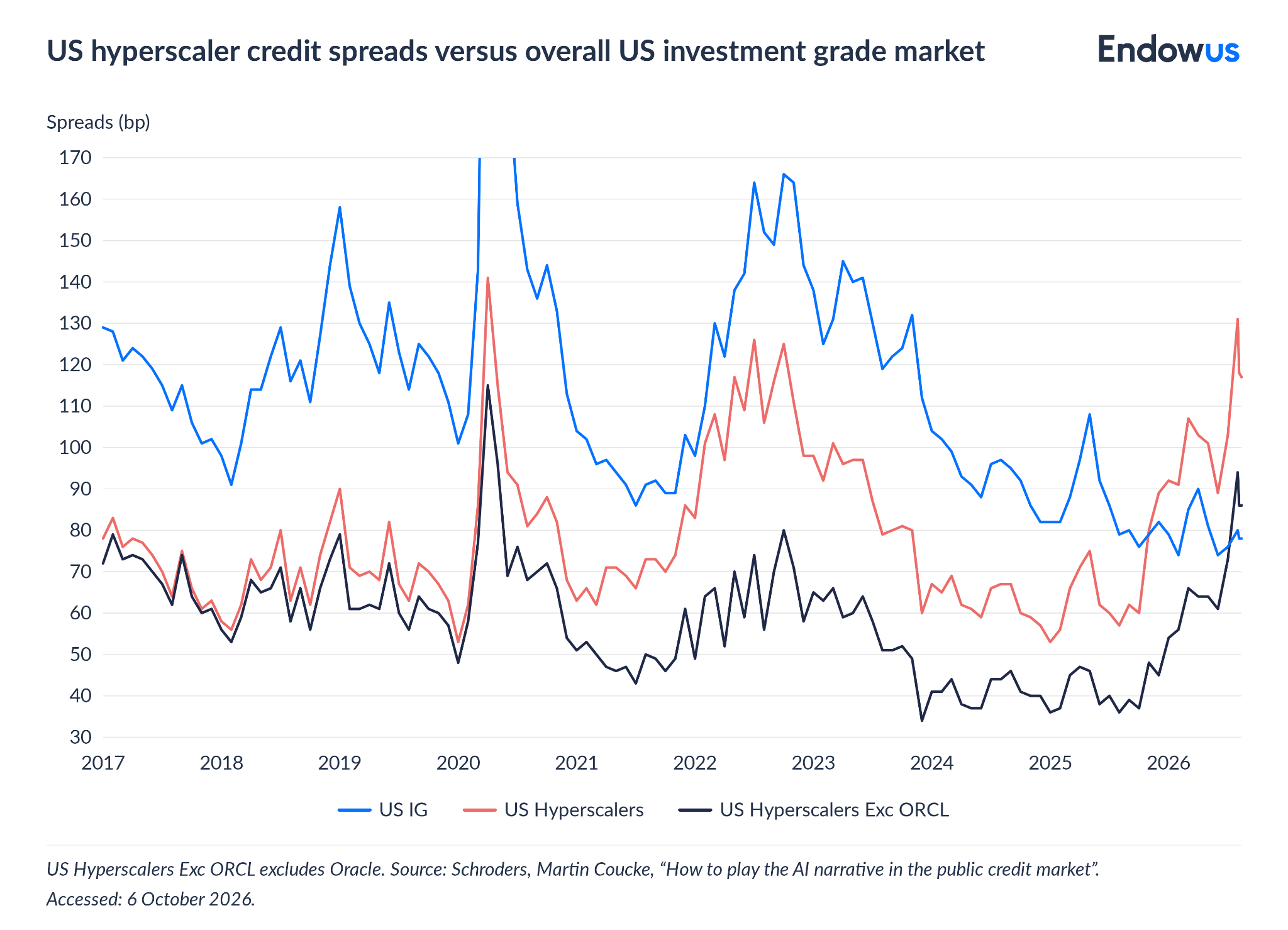
One segment of the US IG bond market that has been under the spotlight recently has been the AI-related US hyperscaler issuances. These hyperscalers have tapped the bond market significantly for their AI-related capex, and their combined issuance is forecasted to reach roughly 5.4% of the total investment grade market by 2026.2
So far, the credit market has displayed some signs of supply indigestion, with markets pricing these US hyperscaler issuances at a spread premium of around ~40bps above that of the average US IG credit. In fact, this extra premium required to borrow money by the hyperscalers has been widening this year, despite the underlying businesses remaining resilient.
With such sectors expected to play an even larger role within the IG index, credit selection becomes increasingly important to weigh risk/return tradeoffs, and active approaches can help mitigate concentration risks better.
Recalibration or rate hike cycle—what’s ahead?
It is challenging to predict where rates go from here, but as discussed above, yields depict the market’s expected path for rates.
The question remains whether the September 2026 rate hike signals the start of a rate hike cycle, or a Fed policy recalibration from 2024–2025’s precautionary rate cuts against a possible downturn. J.P. Morgan Global Research sees the possibility of another rate hike later this year, but finds it unlikely to mark the start of a new cycle—a view similarly shared by Vanguard.
According to Michael Feroli, chief US economist at J.P. Morgan, “The case for a hike is simply that core PCE inflation has been above 3% every month this year and has made little recent progress heading toward 2% [...] The Chair’s repeated stern warnings on inflation intolerance [risked] institutional credibility [without] some action to back it up.”
However, regardless of the rate movement, history has shown that it is important to stay invested and not try to time the market. All-in bond yields are now relatively more compelling for new investors looking to put excess cash to work in bonds, reflecting a higher total return potential due to the higher starting yields, provided spreads stay relatively rangebound.
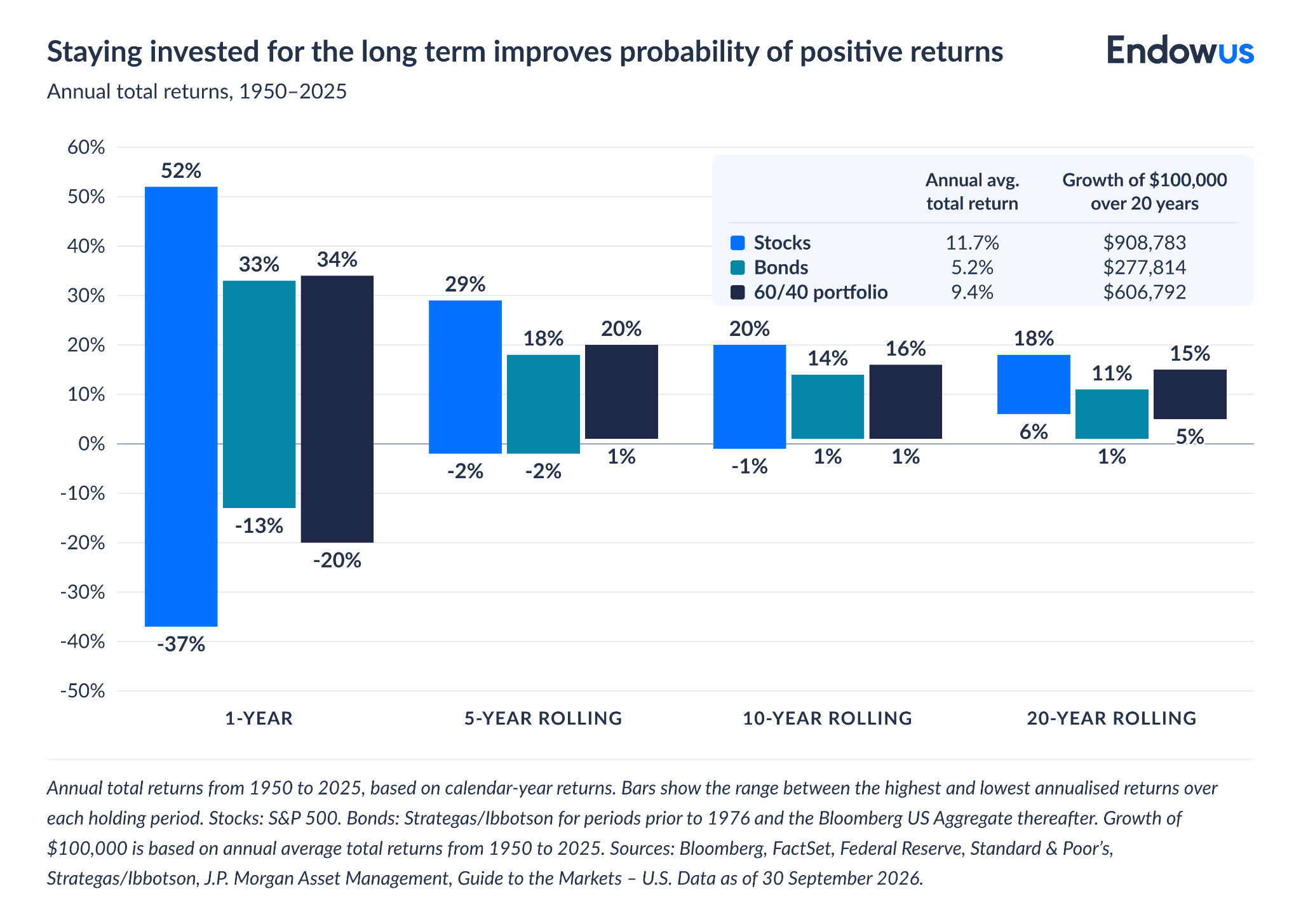
Existing bondholders sitting on a mark-to-market loss may wish to re-assess their bond portfolios to review if their goals have changed. Otherwise, it would be prudent to maintain a longer-term perspective and position for a recovery. It is important to look at total returns including the distributions received, not just the NAV, when evaluating return on investment.
Bonds remain a key pillar within portfolios, but look beyond traditional index-like exposures for diversification benefits
There has been growing criticism of bonds becoming less effective as a hedge to equities of late. Recency bias is partly to blame, due to the lacklustre 2022 performance. However, if we consider a longer timeframe, in the last century, bond returns actually showed a positive performance in the 21 out of 25 years when stock returns were negative.3
At the Endowus Investment Office, bonds remain a central pillar in portfolio construction and an important diversifier to equities. While government bonds were less effective as an equity hedge during times of elevated inflation regimes (e.g. 2022–2024), they are most effective as a hedge when growth is challenged. We do not expect that relationship to change fundamentally.
However, to improve the portfolio’s diversification and reduce rate risk, we need to look beyond traditional index-like exposures that can be government bond-heavy. Below, we discuss a few areas investors may explore that can broaden portfolios and improve diversification further. These are broad suggestions, and do not constitute a tactical recommendation.
Corporate bonds: High yield vs investment grade
With traditional bond indexes typically comprising 50-60% in government bonds, a good place to start is to assess your allocations to corporate bonds as well as reviewing the risk-return tradeoffs between investment grade and high yield (HY) corporate bonds.
While investment grade bonds are more sensitive to rates (i.e. a higher duration risk), high yield bonds normally have a lower duration sensitivity, given their higher coupon income during the bond’s life and therefore lower price sensitivity to the present value of the final repayment cashflow. This gives high yield a slight edge from a rate risk perspective, especially for shorter duration high yield bonds.
With credit fundamentals remaining strong and defaults low, and the quality composition of the US HY index now improving to more than 60% in highest tier BB-rated debt, high yield debt is presenting itself as a more attractive building block within fixed income. As the yield-to-worst chart earlier shows, the average US HY bond yields around 8.4% today, providing about 240bps of yield pickup over US investment grade, while having less rate risk.
Of course, it is important to remain selective within HY due to the higher corporate credit risk, exercising caution in the lower-rated credits such as single B and CCC, which have weaker balance sheets and higher leverage, especially under a rising rate environment. Given the current tighter spread environment in HY, credit selection also remains key. An actively managed approach with rigorous bottom up selection can help better navigate the risk/reward tradeoffs.
Emerging market bonds
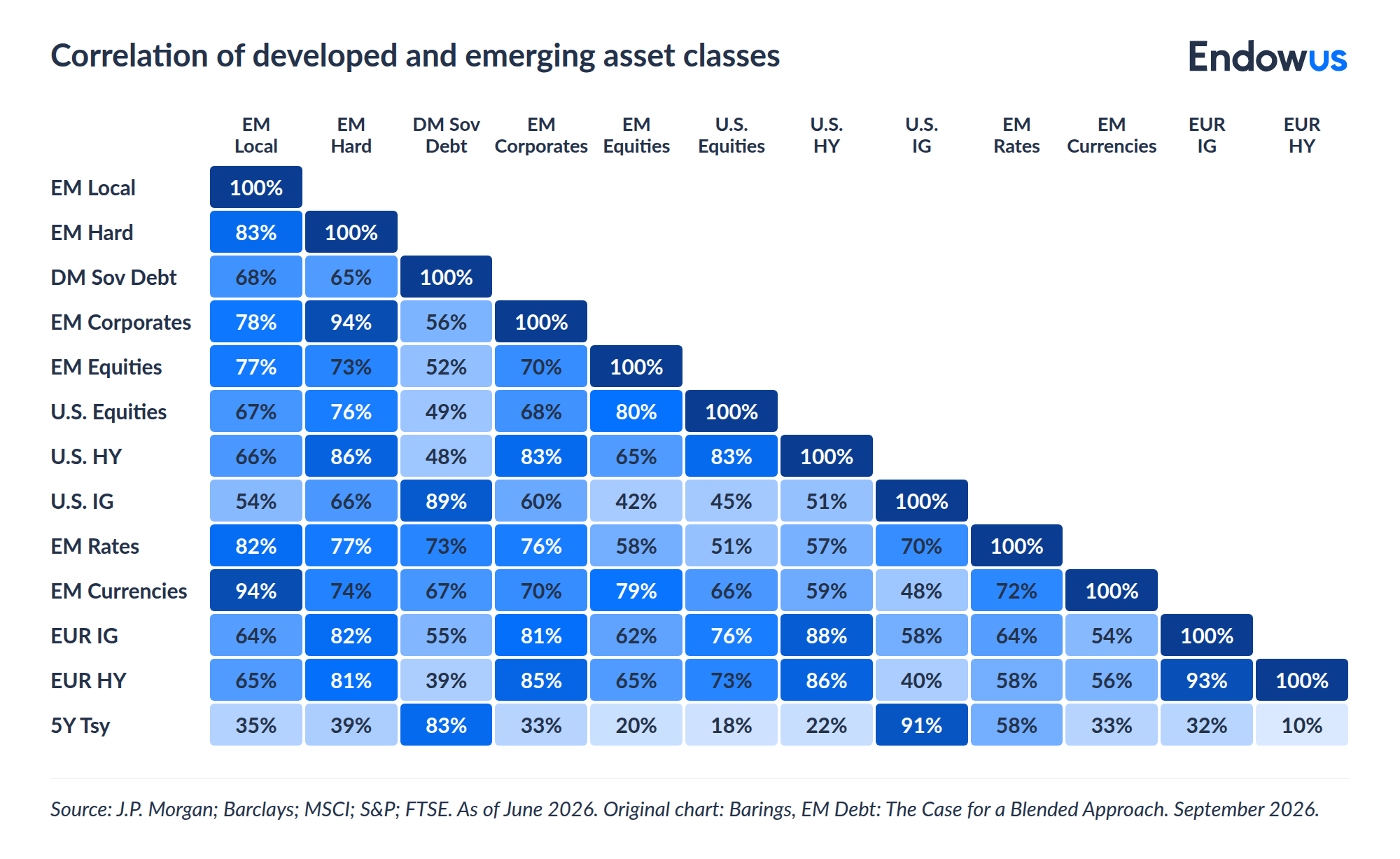
One area that presents a unique diversification to IG debt are emerging market (EM) bonds. They introduce another layer of risk premium specific to emerging markets, including the exposure to sovereign risk, geopolitical risk, and currency fluctuations.
Despite the common misconception that EM debt is low quality and high risk, EM fundamentals have improved. According to Barings, nearly half of the EM sovereign hard currency market and more than 60% of the EM Corporate debt market are rated investment grade today. Defaults remain relatively low within EM, with the average EM Sovereign default rate at 1.7% in the last 10Y.
As we saw with the yield-to-worst chart above, emerging bonds yield around 7.2%, above its 15-year median level (as of September 2026). From a correlation standpoint, EM bonds have a ~0.5 to 0.7 correlation to US investment grade, and an even lower correlation of ~0.3 to 0.4 to the 5yr US Treasury, providing a useful diversification vehicle against portfolios that are more government bonds and IG-debt heavy.
With EM bonds being a vast asset class that varies by EM countries, credits, and currencies, finding a good active manager that is experienced in EM credit selection with a proven track record would be key.
Both HY and EM bonds typically have higher standalone volatility profiles due to the higher credit risks for HY, as well as the additional EM sovereign and currency risks for EM bonds. All this must be taken into account, alongside the improvement in total return potential, when adding them to your portfolio.
Short duration bonds
For investors who are concerned about rising rates and want to manage the interest rate risk in their portfolios toward more NAV preservation, short duration bonds are one area which typically demonstrates more resilience in this regard.
These provide a yield pickup over money market securities by investing into high quality short-dated corporate bonds with a near-term maturity. The shorter time to maturity means that rising rates have a smaller price impact on the present value of the final repayment cashflow, compared to a similar longer duration bond.
However, this trade-off would result in a lower yield and total return over time, and so one has to weigh that accordingly based on their individual circumstances and goals.
The Endowus Cash Smart Portfolios, in particular the Cash Smart Enhanced and Cash Smart Ultra portfolios, are a good starting point for clients looking for a portfolio of short-duration and money market securities, which currently yield around 2% (net yield after fees, in SGD, as of 9 October 2026). Other individual short-duration funds are also available, and you may consult with your client advisor for further recommendations.
Additionally, floating rate securities are another way to protect against rising interest rates, since such securities tend to have increased coupons as rates increase. Floating rate notes (FRNs), corporate floating rate bonds, fixed-to-float hybrid securities, and senior loans are some examples of securities that benefit to some degree from rising rates, since their coupons are typically reset quarterly or on a future reset date, incorporating the rising benchmark rates. Note that some funds in this space are typically for accredited investors only, particularly senior loans.
Systematic strategies
Apart from diversifying by exposures, it can also be beneficial to diversify your portfolio by investment style. A large part of portfolios today invest with traditional active fundamental credit managers.
Systematic managers, unlike traditional active, rely on a rules-based and data driven approach in their portfolio construction. They are able to assess thousands of securities based on return and risk factors, rank them systematically based on factors such as spreads, valuation, balance sheet health, issuer risk, term premium, and customise a diversified portfolio that seeks to achieve certain risk-return objectives.
This quantitative approach is transparent and repeatable at scale, which helps in navigating large investment universes. Another advantage of adding systematic strategies to your portfolio is improving security-level diversification and reducing overlap.
A blend of both styles—fundamental and systematic—can help diversify return correlation and improve portfolio resilience.
Build a Core bond portfolio that is diversified and purposeful
There is no one right bond portfolio—it differs from individual to individual due to different objectives, horizons, and risk tolerance. However, given a risk-return objective, one is able to build a Core portfolio that is diversified across return sources.
Being mindful of the overall portfolio duration is equally important, to ensure the portfolio is well-matched against one’s appetite for interest rate volatility. For SG-based investors, choosing SGD-hedged share classes of global bond funds to match one’s SG-based liabilities is important so as to not take on unnecessary FX risk, although hedging costs remain elevated and can potentially eat into total returns over time. Alternatively, SGD-based investors can also look at SGD-denominated bonds which reduces the need for hedging, although yields would be naturally lower.
At Endowus, we carry various building blocks within fixed income that can help craft a portfolio suitable for you, starting with our Flagship and Income Portfolios which serve as core building blocks, as well as other sub-asset class individual funds that you can use to complement your core.
Through Endowus Fund Smart, you can access institutional-quality bond strategies from global fund managers such as PIMCO, Franklin Templeton, and Dimensional Fund Advisors—explore 100+ bond funds here. Endowus fees apply; please refer to our pricing page.
Goal-based investing means calibrating your portfolio allocation according to the specific need and for when you need it, and then carefully selecting the building blocks to create a personalised investment portfolio. As with equities, stay invested and resist basing your decisions on where you think rates are headed. Please consult with your client advisor should you require any guidance.
Read more: Building a fixed income allocation: from building blocks to portfolio
Sources
1Bloomberg data.
2J.P. Morgan, Guide to the Markets, U.S. data, 4Q 2026, page 37.
3J.P. Morgan, Guide to the Markets, U.S. data, 4Q 2026, page 40.
Webinar: Travel, market and crypto bubbles
.png)
We are heading into bubble trouble

Endowus 2020 review and 2021 outlook



%20F1(2).webp)

.webp)
.webp)






.webp)